Gemstone Clarity Scale Explained: Understanding Flaws
October 23, 2025
Gemstone Color Grading Chart Explained: Describing Hues
October 26, 2025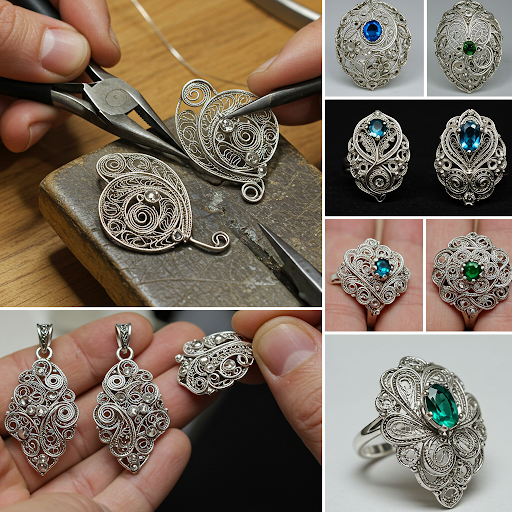
Hello friends, I’m Chuong Gems from Vietnam. Today, I’m excited to share with you the beautiful art of jewelry filigree technique and delicate wirework.
Introduction to Jewelry Filigree Technique
Filigree is one of the most delicate and intricate jewelry-making techniques that involves twisting, curling, and shaping fine metal wires into detailed patterns. This ancient art form has been practiced for thousands of years, creating stunning pieces that showcase the craftsman’s skill and patience.
Essential Tools for Filigree Work
- Fine metal wires: Usually made from gold, silver, or copper
- Pliers set: Round-nose, flat-nose, and chain-nose pliers
- Wire cutters: For precise cutting of delicate wires
- Soldering equipment: Torch, flux, and solder
- Magnifying glass: For detailed work
Step-by-Step Filigree Wire Working Guide
1. Wire Preparation
Start by selecting the appropriate wire gauge for your project. I recommend beginning with 28-30 gauge wire for most filigree work. Clean the wire thoroughly before starting to ensure good solder adhesion.
2. Basic Wire Manipulation
Begin by practicing these fundamental techniques:
- Coiling: Create tight or loose spirals
- Scrolling: Form S-curves and scrolls
- Weaving: Intertwine multiple wires
3. Pattern Creation
Start with simple patterns and gradually progress to more complex designs. I always recommend sketching your design before working with the wire.
Maintenance and Care
To ensure your filigree jewelry maintains its beauty:
- Store pieces separately to prevent tangling
- Clean gently with a soft brush and mild soap solution
- Avoid exposure to harsh chemicals
Design Ideas for Filigree Jewelry
Here are some inspiring design concepts:
- Nature-inspired patterns (leaves, flowers, vines)
- Geometric designs (Celtic knots, spirals)
- Combined techniques (filigree with gemstone settings)
Tips and Tricks to Improve Your Filigree Skills
From my personal experience, here are some valuable tips:
- Practice patience: Filigree work cannot be rushed
- Work in good lighting: Proper illumination is crucial for detailed work
- Start small: Begin with simple pieces before attempting complex designs
- Keep your tools clean: Maintain your tools regularly for better results
Remember, mastering filigree takes time and practice. Don’t get discouraged if your first attempts aren’t perfect. With dedication and patience, you’ll develop the skills to create beautiful filigree jewelry pieces.
If you have any questions about filigree techniques or jewelry making in general, feel free to ask in the comments below. Happy crafting!