
Belly Rings: Showing Off Your Style
November 17, 2025
Jewelry Enameling Technique Tutorials: Adding Color
November 20, 2025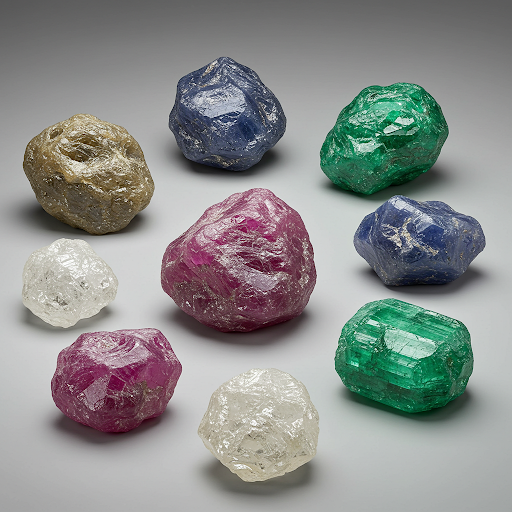
Hi friends, I’m Chuong Gems from Vietnam. Today, I’m excited to share with you comprehensive insights about gemstone rough wholesale – a crucial aspect of the gemstone industry that I’ve been passionate about for years.
Introduction to Raw Gemstones
Raw gemstones are the foundation of the entire gemstone industry. As someone who has worked extensively with rough stones, I can tell you that these uncut, unpolished minerals hold incredible potential and beauty. They’re not just rocks – they’re nature’s treasures waiting to be transformed into stunning jewelry pieces.
Popular Types of Rough Gemstones
Let me share about the most common types of rough gemstones I work with:
- Rough Diamonds: These often appear as octahedral crystals with a greasy luster. Despite their rough appearance, they hold the potential to become the most valuable gemstones.
- Ruby Rough: In its natural state, ruby rough typically shows a deep red color, though the intensity can vary. Some pieces might have visible hexagonal crystal structures.
- Sapphire Rough: These come in various colors, though blue is most famous. The rough crystals often have a barrel-shaped or pyramidal form.
- Emerald Rough: Usually found in hexagonal crystal formations, rough emeralds display their characteristic green color even in their natural state.
Mining and Processing Journey
The journey from mine to market is fascinating, and I’ve had the privilege of witnessing many parts of it firsthand. Here’s how it typically works:
- Mining: This involves either open-pit mining or underground operations, depending on the deposit type.
- Initial Sorting: Rough stones are separated from host rock and categorized by potential quality.
- Cleaning: Careful cleaning removes external materials while preserving the stone’s integrity.
- Assessment: Expert evaluation determines the best cutting approach to maximize value.
Factors Affecting Rough Gemstone Value
Through my experience in the trade, I’ve learned that several key factors determine a rough stone’s value:
- Color Quality: The intensity and distribution of color significantly impact value.
- Clarity: Even in rough form, we can assess the presence of inclusions and potential clear areas.
- Size: Larger pieces generally command higher prices, especially if they can yield sizeable cut stones.
- Crystal Formation: Well-formed crystals often indicate better internal structure.
Tips for Buying Quality Rough Gemstones
Let me share some practical advice I always give to my clients:
- Buy from reputable sources: Always work with established dealers who can provide provenance information.
- Check for natural properties: Learn to recognize natural crystal formations and surface features.
- Examine under proper lighting: Natural daylight or neutral white light is best for true color assessment.
- Consider potential yield: Estimate how much of the rough might be lost during cutting.
Market Trends and Future Outlook
The rough gemstone market is dynamic, and I’ve observed several important trends:
- Growing demand for ethically sourced rough stones
- Increasing interest in rare and unique color variations
- Rising appreciation for natural, untreated stones
- Enhanced technology for rough stone evaluation and processing
Remember, while working with rough gemstones requires expertise, it’s one of the most rewarding aspects of the gem trade. I hope this information helps you understand the fascinating world of rough gemstones better.
Feel free to reach out if you have any questions about rough gemstones. I’m always happy to share my knowledge and experience with fellow gem enthusiasts!