

Jewelry Appraisal Cost: Knowing Your Investment
January 2, 2026
Jewelry E-commerce Platform: Selling Online
January 4, 2026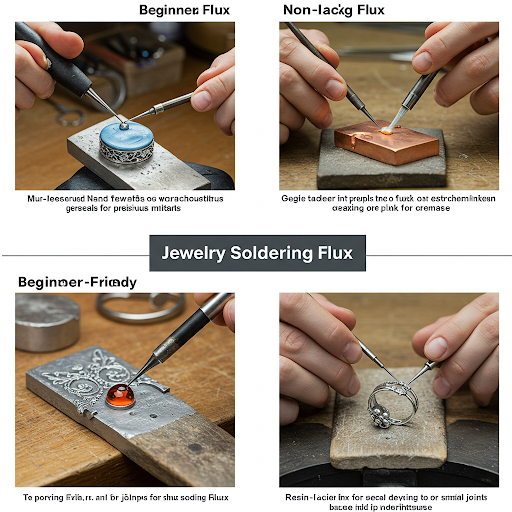
Hi friends, I’m Chuong Gems from Vietnam, and today I’m excited to share with you everything you need to know about jewelry soldering flux types and how to achieve those perfect, clean joints we all strive for.
Why is Soldering Flux Important in Jewelry Making?
As a jeweler, I’ve learned that flux is not just another tool – it’s absolutely essential for successful soldering. Flux acts as a protective barrier, preventing oxidation during the heating process and helping the solder flow smoothly. Think of it as your faithful assistant that ensures your precious metals bond perfectly!
Common Types of Jewelry Soldering Flux
1. Acid-Based Flux
This is perhaps the most common type I use in my workshop. Acid-based flux is highly effective for most precious metals, particularly silver and gold. However, I always remind my students to handle it with care due to its corrosive nature.
2. Non-Acid Flux
For those who prefer a gentler approach, non-acid flux is an excellent alternative. I often recommend this type to beginners as it’s safer to handle and still provides good results, especially when working with copper and brass.
3. Resin-Based Flux
This type holds a special place in my toolkit. Resin-based flux is perfect for detailed work and small joints. It’s less aggressive than acid-based flux but still delivers excellent results.
Choosing the Right Flux for Different Metals
From my experience, selecting the appropriate flux is crucial for successful soldering. Here’s what I recommend:
- Silver and Gold: Acid-based flux works best due to its strong cleaning action
- Copper and Brass: Non-acid flux is usually sufficient and safer to use
- Delicate or Intricate Pieces: Resin-based flux offers more control
Steps to Achieve Clean Joints
Let me share my tried-and-true process:
- Clean the metal thoroughly – I can’t stress this enough! Any dirt or oils will prevent good bonding
- Apply flux carefully – Less is often more. Use just enough to cover the joint area
- Heat gradually – Don’t rush this step. Even heating is key to success
- Watch for the flow – The solder should flow smoothly like water
- Clean up properly – Remove any flux residue after soldering
Common Mistakes and How to Avoid Them
Over the years, I’ve seen (and made) various mistakes. Here are the most common ones:
- Using too much flux – This can actually prevent good bonding. Use just enough to cover the joint
- Wrong flux type – Always match your flux to your metal type
- Poor cleaning – Never skip the cleaning step, both before and after soldering
- Improper storage – Flux can deteriorate if not stored correctly
Storage and Maintenance Tips
To keep your flux in optimal condition:
- Store in airtight containers
- Keep away from extreme temperatures
- Label containers with purchase dates
- Replace flux that shows signs of degradation
Remember, good soldering starts with quality flux and proper technique. Don’t hesitate to practice with different types to find what works best for you. Happy soldering!