
Jewelry Appraisal Online: Convenience and Accuracy
December 23, 2025
Gemstone Cleavage: How Gems Break Smoothly
December 26, 2025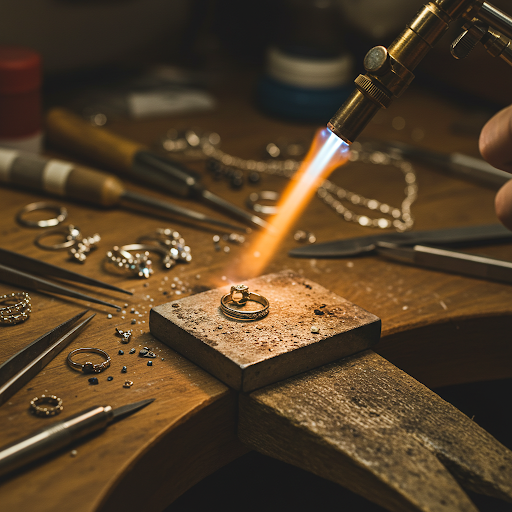
Hello friends, I’m Chuong Gems from Vietnam. Today, I’m excited to share with you everything about jewelry soldering – a crucial technique in metalworking that every jeweler should master.
Introduction to Jewelry Soldering
Jewelry soldering is a fundamental technique in metalworking that involves joining two or more metal pieces together using a metal alloy (solder) with a lower melting point than the base metals. This process is essential for creating complex jewelry designs and ensuring the durability of your pieces.
Types of Solder Used in Jewelry Making
Different types of solder are available, each designed for specific applications:
- Hard Solder: Has the highest melting point and creates the strongest bonds. Ideal for initial joins.
- Medium Solder: Used for secondary joints near previously soldered areas.
- Easy Solder: Has the lowest melting point, perfect for delicate work or areas close to existing joints.
- IT Solder: Special silver solder designed for joining different types of metals.
Metal Preparation Process
Proper preparation is crucial for successful soldering:
- Cleaning: Remove all oils, oxidation, and contaminants from the metal surfaces.
- Filing: Ensure joining surfaces are flat and fit together perfectly.
- Applying Flux: Use appropriate flux to prevent oxidation during heating.
- Positioning: Arrange pieces precisely before soldering.
Precise Soldering Techniques
To achieve high-quality soldered joints:
- Heat Control: Apply heat evenly and gradually to prevent warping.
- Solder Flow: Watch for the solder to flow completely through the joint.
- Cooling: Allow pieces to cool naturally to prevent stress in the metal.
Essential Tools and Equipment
You’ll need these basic tools for jewelry soldering:
- Torch: A quality torch with adjustable flame
- Soldering Surface: Heat-resistant soldering block or charcoal block
- Tweezers and Picks: For positioning pieces and solder
- Safety Equipment: Heat-resistant gloves, safety glasses, and proper ventilation
Tips and Precautions
To avoid common soldering mistakes:
- Always work in a well-ventilated area
- Start with clean, dry surfaces
- Use the appropriate amount of solder – less is often more
- Practice on scrap pieces before working on valuable items
- Keep your workspace organized and clean
Remember, practice makes perfect in jewelry soldering. Don’t get discouraged if your first attempts aren’t perfect – every professional jeweler started as a beginner. With patience and dedication, you’ll develop this essential skill.
Feel free to share your soldering experiences or ask questions in the comments below. Happy soldering!